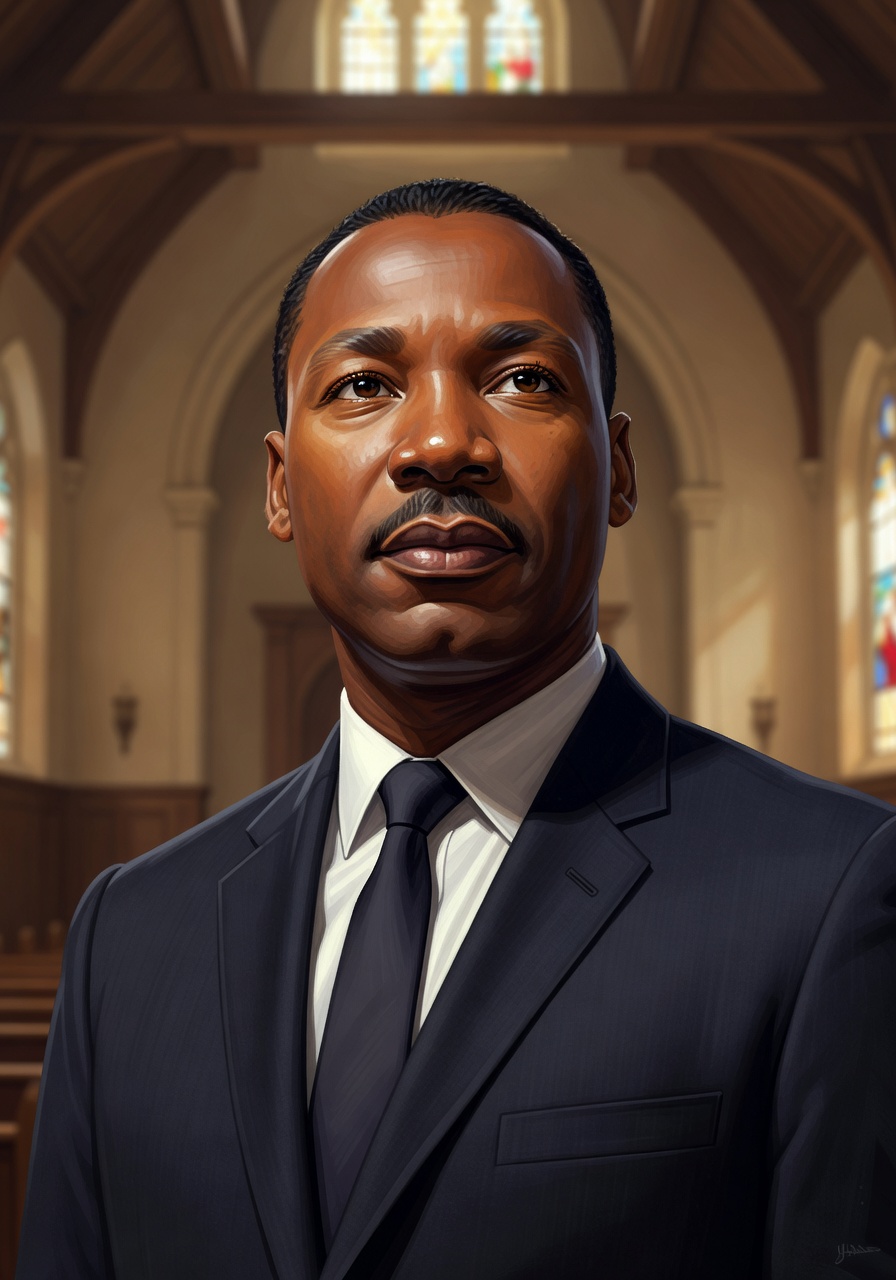
Martin Luther King Jr.
“His dream outlived the bullet”
Martin Luther King Jr. was 25 when he led the Montgomery bus boycott. Twenty-five. A young pastor, newly married, with a baby daughter, who decided that Rosa Parks’s arrest was the moment to stand up by sitting down. His house was bombed. He was stabbed, beaten, jailed, wiretapped by the FBI, and told by fellow clergy to slow down. He never slowed down. King’s genius wasn’t just his oratory — though “I Have a Dream” remains the most powerful speech in American history. It was his insistence that love could be a weapon, that nonviolence wasn’t weakness but the hardest kind of strength. He won the Nobel Peace Prize at 35. By the time he was killed on that Memphis balcony at 39, he’d expanded his fight beyond race to poverty and war. The bullet on April 4, 1968, silenced the man but not the movement. His words still make people uncomfortable, which means they’re still working.
Permanent Stones
Leave a Stone
Add a permanent tribute anchored to the Bitcoin network.
This memorial is permanently anchored
Cryptographically secured on Bitcoin using the Everstone Protocol.